
Search

EDU369 By Penny

First blog post – EDU639 – Trends

                                 Trends in Distance Education

I remember when I was in elementary school the teachers use to stress the 3 ‘R’s of education – reading, (w)riting and-a ‘rithmetic, which although it was spelled incorrectly it was the trend at that time. The curriculum was created by grade levels without taking into consideration different learning styles, sharing was expected, not something that was taught to us in preschool or kindergarten and utilizing technology in the class was  a rarity. Now in 2017 the trend is the 4 ‘C’s of education – communication, critical thinking, collaboration and creativity. The learning has shifted from teacher directed to incorporate the student more as a creator in the learning process, with the teacher guiding them through various techniques now available through the use of technology.

Forecasting the future in learning and the impact technology advances will have on the education system are being explored by many, with a study even being done on the results of various studies relating to trends in distance education. Through all the studies however there is one aspect they seem to be having the greatest difficulty with, which is how to improve professional development and better support the faculty. The NMC reports for 2015 & 2017 state as wicked challenges ‘rewards for teaching’ (NMC 2015) and ‘rethinking the roles of educators’ (NMC 2017) but they don’t discuss how to assist with better preparing educators with the changes taking place not only in distance learning but in the education system as a whole. While forecasting the future in distance education is great, if the educators are not educated on the new aspects for the future then how can the students fully benefit? Creating and implementing technology in distance education (and education in general) and analyzing the future of education is important however we must be sure to look at all aspects ensuring there’s a balance in the advancements made by students and educators.


http://www.futureofed.org  2020 Forecast: Creating the future of Learning
http://www.youtube.com/watch?v=ikcPU5Q6tPs     NMC Horizon report: 2015 Higher Education Edition
http://www.go.nmc.org/2017-he   NMC Horizon report: 2017 Higher Education Edition
Durak, G., Trends in Distance Education: A Content Analysis of Master’s Thesis. TOJET: The Turkish Online Journal of Educational Technology. Jan. (2017) Volume 16 Issue 1 p. 203-218
http://www.iste.org/explore/articleDetail?articleid=865
Featured post

The Home Stretch!

     Typically if you can google it, then you can use it or at least that’s what I thought before learning about OER’s. The laws that are created to protect the author and ensure their material is shared only how they intended is more detailed than I ever imagined. With that being said there still are numerous resources available for instructors to obtain with little to no cost to them or their students. However as Staumshiem discusses in his article from July 26,2016 many instructors are unaware of the resources available to them. (https://www.insidehighered.com/print/news/2016/07/26/study-finds-use-open-educational-resources) The lack of knowledge that there are these numerous alternatives that are free or inexpensive to instructors and students is an aspect that needs to change. Instructors need to be better informed of the options available and how to utilize these options within their courses. I don’t believe we need to completely stop utilizing textbooks within a course but I do believe the most recent information is what we should be utilizing with our students. I mean it’s like I said before about the same aspects being utilized in an ECE course at a local college. The instructor may have changed but the textbook hasn’t changed in over 25 years and that is just absurd! (Sure they updated the edition but that is it.) I believe it’s our responsibility as instructors to be aware of and utilize the newest and most pertinent information within our class to ensure each student is obtaining a quality education.  One that they could obtain either from inside a classroom or online through various technological devices (computers, laptops and various mobile devices as well).

     How students obtain the information from a course is important and we need to take this into consideration as we create and utilize OER’s. As we’ve all said before, technology is here to stay and as educators we must be creative in how we develop our courses to sustain the interest of the students and technology assists us with doing this. As it discusses in ‘6 Mobile Learning Myths Busted!’ (https://wwwyoutube.com/watch?v=ESQNcHbmzQQ) mobile learning should be a complimentary add-on to allow students to choose but many instructors are leery of utilizing such aspects because of their own lack of knowledge (and ability).  Now don’t think I’m some sort of expert on creating totally online courses that could be utilized with any type of technology, because I’m not. However I am willing to learn about it so I can take my knowledge and experience within my field of expertise, Early Childhood Education, to create a much-needed update to the courses presently being offered. I mean after all I’m taking these courses at Post because I see the need for change within my field. As I proceed each week I know I can increase my knowledge on OER’s and create courses that are mLearning friendly to better prepare the teachers of these young children in their future endeavors!


Straumsheim, Carl. Study finds use of open educational resources on the rise in introductory courses’ Inside Higher Ed. July 26, 2016. https://www.insidehighered.com/print/news/2016/07/26/study-finds-use-open-educational-resources
6 Mobile Learning Myths Busted! https://wwwyoutube.com/watch?v=ESQNcHbmzQQ

Week 5 the journey continues!


      So the journey continues! Within the past two weeks we’ve looked at PBL (both project based & problem based learning) and flipping a classroom. With problem based learning and project based learning both are open-ended learning techniques however project based literally states it relates to ‘real-world’ learning, not an open-ended issue, which could be real or fictitious as in problem based learning. Both project and problem based learning have been implemented throughout the educational system for generations allowing students a more in-depth analysis of the teachers/schools planned curriculum. To assist with learning more about project based learning I explored a website from Bob Pearlman, which includes 7 topics with videos relating to Project Based Learning. (http://www.bobpearlman.org/BestPractices/PBL_videos.htm#real ) Section four ‘The Building Blocks of Project Based Learning’ and section six ‘Problem Based Learning: 21st Century Skills & Assessment’ were quite interesting. Within section 4 it discusses the deeper learning style & how it teaches the students to be leaders opening up their creative side as they collaborate. I especially liked hearing about the reflection at the end of the PBL unit, where the teachers and students discuss the positives and aspects to alter for the next time to create a stronger unit for all involved. Then within section 6 there are 3 videos and in the last video teachers discussed how they were getting the students ‘globally ready’ by utilizing the PBL approach. This section also discussed the online grade book, which in this case was maintained throughout their high school career and really showed the students growth. The comment section assisted students and parents to better understand the content process, which leads to stronger relationships between teachers, students and parents. This website tied together all the aspects we had discussed within unit 4 nicely for me and more.
       Then there’s flipping a classroom. Flipping a classroom was a completely new term for me but not a new concept. I can recall when I was in school back in the 80’s some of my teachers having us doing the readings at home then together we’d discuss and explore what we read. I know it’s not completely the same as what Bergermann and Sams’ discuss in their book (and numerous webcasts) but it still was a hands on approach that was taking our learning to a higher level (and our desks weren’t in perfect little rows either). While all the information Bergermann & Sams discussed was quite informative I found John Sowashs’ video ‘5 Things I wish I knew when I flipped my class mp4’ to be quite beneficial. (https://youtu.be/4JPdGlyt6gg) Although much of the information is the same Sowash spoke of how he flipped independently, whereas Bergermann & Sams were working as a team. It made me believe that one teacher flipping their classroom in a school can make a difference and encourage others to flip as well.
      As a person who learns more by doing, not just hearing or reading, exploring PBL and flipping a classroom has been an eye opener. I’m all for putting the learning in the hands of the student and guiding them through the process, building their critical thinking skills and making them ‘globally ready’ for their future in a creative manner. As my daughter progresses in school I look forward to seeing which approaches her teachers utilize. I will be sure to continue to build on her creativeness and critical thinking skills as well to better prepare her for the future.


 http://www.bobpearlman.org/BestPractices/PBL_videos.htm#real  Pearlmann, Bob. Project Based Learning
Bergermann, J., and Sams, A. (2012). Flip your classroom: Reach every student in every class every day. Eugene, Or: ISTE.
https://youtu.be/4JPdGlyt6gg  Sowash, John. 5 Things I wish I knew when I flipped my class mp4

Trends & Models of EDU369 week 3

As we move into the 3rd week of EDU369 I never thought this course would affect me as it has! Looking at the future trends in education has made me reminisce about my past and how with the assistance of technology the educational system is transforming from read the chapter and take the test to hands on approach that includes various technological aspects. By utilizing blended learning models such as the Rotation Model, Flex Model, A La Cart Model or Virtual Model teachers are able to not only improve the learning process within their classroom, but within the entire school with the goal of blended learning throughout the district and even state-wide. These 4 models put learning into the students’ hands with the teacher there as a guide, that encourages them to explore and continues forward challenging each student independently and appropriately. Students are able to utilize technological programs that instantly show their understanding of the material and offers greater assistance on areas of weakness. Then the teacher is able to review their progress, and implement specific one on one or small group lessons to enhance the learning process ensuring each student comprehends the new knowledge and can relate it to other learning and/or life aspects. If when I was in high school the A La Cart model https://youtu.be/RuXdOLODZc8 had been available I know at least 1/3 of my class if not more would have utilized this model, especially if it had a dual credit option. To have been able to take a course that we could do independently and that challenged us to a higher level would have been amazing. It all sounds quite beneficial for the class environment doesn’t it, so why aren’t all teachers utilizing one of these models in their class?
Learning about these various models make me look at my field of Early Childhood Education (ECE) more. Seeing how much the education system has changed but the strategies many instructors utilize in the ECE field has not. I believe if they viewed ‘6 Reasons We Love Blended Learning’  https://youtu.be/hRcdlYRJeuMit would peek their curiosity allowing them to see how much blended learning adds to the environment not takes away, it puts the ‘fun’ into learning and ECE instructors are all about the kids playing and having fun. Then by viewing webinars such as ‘From Zero to Blended Jumping into Blended Learning at the Elementary Level’,https://youtu.be/O2jEr38zzOM  instructors would obtain greater details related to blended learning to assist with incorporating more training for their students. This in turn would not only educate the ECE students about the 4 models but also how to incorporate the models to benefit all students in their classrooms. Then school districts wouldn’t need to spend as much money on teacher training and could utilize professional development funds on advancing blended learning within the school/district. The district would be able to put into place a few mandatory trainings like EdUHK has done to ensure all teaching staff has obtained the same basic knowledge and create stronger follow-up training for all. I know it all sounds simple doesn’t it? Through this course I’m realizing that the reality is some in the education field are not ready to evolve, they feel their way is best way for students and in turn the students are losing out on a world of possibilities that technology has to offer! Changes are being made however some are quite slower than others. We need to figure out how to remove this ‘fear’ they have of incorporating blended learning and increase their confidence on creating and utilizing this style of teaching in their classroom.
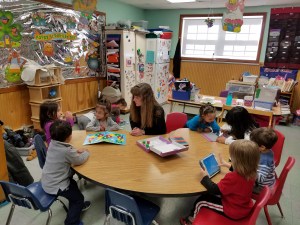
20170322_110513
School Readiness class in action!
References: Liam, CherPing and Wang, Libing. Blended Learning for Quality Higher Education: Selected Case Studies on Implementationfrom Asia-Pacific. United Nations Educational Scientific and Cultural Organization. 2016
https://youtu.be/hRcdlYRJeuM      – 6 Reasons We love Blended Learning
https://youtu.be/O2jEr38zzoM    – From Zero to Blended Learning at the Elementary Level
https://youtu.be/RuXOLODZc8  – A La Cart Model

Blog post title

This is an additional placeholder post. Click the Edit link to modify or delete it, or start a new post.

Blog post title

This is an additional placeholder post. Click the Edit link to modify or delete it, or start a new post.

Blog at WordPress.com.

Up ↑

Design a site like this with WordPress.com
Get started